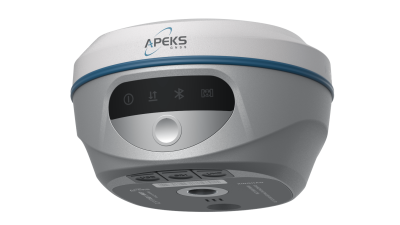
Hey there! You know, in the fast-moving world of geospatial surveying, everyone’s talking about how important reliable Gnss Cors Stationshave become. I recently came across a report from MarketsandMarkets that says the Global Gnss market is expected to hit aroundUSD 77.12 billion by 2026 — pretty impressive, right?
These CORS stations are kind of the backbone for accurate positioning because they create a network that constantly monitors and corrects satellite signals in real time. For folks all around the world looking to buy, it’s really crucial to understand what key features to look for — it can make all the difference in making a smart choice.
Here at Shanghai Apekstool (APEKS), we’re all about innovative geospatial surveying and mapping gear, and we know just how vital these stations are for speeding up and improving accuracy in surveys. In this blog, I’ll walk you through the main features of the best GNSS CORS stations out there today, helping you pick the perfect fit for your specific needs — so stay tuned!
Key Advantages of GNSS CORS Stations for Global Buyers
You know, GNSS Continuously Operating Reference Stations, or CORS for short, are kinda game-changers in today’s farming and environmental work. For folks around the world looking to buy or use these systems, the big perks are pretty clear—they help make things more precise, sustainable, and efficient. Thanks to GNSS tech, farmers can now rely on smarter, data-driven methods that not only boost their crop yields but also help them run more eco-friendly operations. The real-time location tracking and super accurate measurements mean farmers can make smarter decisions — like cutting down waste and using resources more wisely.
But it’s not just about farming. These CORS stations are actually pretty versatile—they support advanced research in things like hydrogeodesy and environmental monitoring. Scientists use them to track changes in water levels and other vital ecological stuff, which is super important for predicting environmental shifts and managing water sources. As this tech keeps advancing, the huge amount of data from GNSS CORS stations will continue to empower industries all over the world. Basically, they’re becoming essential tools for anyone trying to stay competitive in this increasingly data-driven world.
Key Advantages of GNSS CORS Stations for Global Buyers
This chart demonstrates the critical features of GNSS CORS stations as rated by global buyers. The features include Accuracy, Cost Efficiency, Setup Time, Data Availability, and Maintenance, with ratings reflecting buyer preferences and priorities.
Understanding the Importance of Accuracy in GNSS Data Collection
In the world of Global Navigation Satellite Systems (or GNSS, for short), getting accurate positioning really is a big deal — especially when it comes to things like autonomous driving and advanced driver-assistance systems, you know? Recently, there’s been some cool progress with single-frequency Gnss Receivers. These days, they can actually handle the high-precision stuff needed for vehicle-to-everything (V2X) comms — meaning they can give you consistent, lane-level positioning even when you’re out in the open sky. That’s super important for navigating tricky urban environments. But, of course, the tricky part is keeping that accuracy in all sorts of conditions — like in city canyons, where skyscrapers block or delay satellite signals. It’s definitely not straightforward.
At Shanghai Apekstool, we know how crucial reliable GNSS technology is for geospatial surveying and mapping. That’s why our systems are built to tackle these challenges head-on, providing pinpoint accurate positioning across different applications. Whether it’s surveying land, managing infrastructure, or helping vehicles navigate better, accurate GNSS data really makes all the difference. By investing in the latest tech and customizing solutions, we aim to support our global customers in achieving top-notch precision and dependability in their work.
Top Features to Consider When Choosing a GNSS CORS Station
So, if you're on the hunt for a GNSS CORS (you know, those Continuously Operating Reference Stations) for your geospatial surveying projects, there are a few key things you really want to keep in mind. First off, accuracy and reliability are absolutely essential—after all, you need real-time, precise positioning to trust your results. It’s worth looking for stations that support multiple frequencies and constellations because that can make a huge difference in getting accurate data, no matter the environment you're working in.
Another thing to consider is how well the station plays with other tools and software you use. Since Shanghai Apekstool (APEKS) offers some pretty innovative surveying solutions, picking a GNSS CORS that can smoothly integrate with GPS units, total stations, and your other gear will seriously make your life a lot easier. Plus, don’t forget about how easy it is to access and handle the data. A straightforward interface and solid data support can save you a ton of time out in the field. Basically, investing in a CORS station that checks all these boxes isn’t just about getting better results—it’s about making your overall workflow smoother and more productive.
Why Reliability is Crucial for GNSS Solutions in Various Applications
You know, reliability really is a big deal when it comes to Global Navigation Satellite Systems, or GNSS for short—especially for those Continuously Operating Reference Stations, or CORS. I came across a report from the European GNSS Agency that, as of 2022, these GNSS systems are actually used in over 100 different ways! We're talking everything from farming to disaster relief. With so many applications, even a small hiccup in the service can cause major headaches—things like slowing down productivity or even putting safety at risk. As the technology improves, making sure everything stays dependable has become even more crucial, since folks rely on super precise geospatial data to make smart decisions every day.

Interestingly, recent studies show that about 73% of GNSS users say that reliability is one of their top priorities. Take precision farming, for example. If the signals aren’t reliable, it could mess up crop yields or how farmers manage their fields. And in emergency situations—like during a disaster—the accuracy of real-time location information could literally be the difference between life and death. So, choosing the right GNSS CORS station isn’t just about features; it’s about really understanding things like uptime rates, signal quality, and whether the station can handle tough environmental conditions. All in all, this focus on reliability really highlights a bigger trend in the industry—where everyone’s looking for solid, trustworthy solutions to meet the ever-growing demands for accuracy in a pretty complex global landscape.
The Cost-Benefit Analysis of Investing in Quality GNSS CORS Stations
Investing in top-notch GNSS CORS stations—those continuously operating reference stations—can really pay off in the long run, even if the initial costs seem a bit steep. I came across a report from the European GNSS Agency, and it’s pretty clear that demand for GNSS tech is soaring. The market’s growing at about 12% a year worldwide! That’s quite a hustle, and it shows just how eager folks in fields like farming, surveying, and transportation are to boost their operations with precise positioning data.
Now, if you do the math, it might seem like a hefty upfront investment, but when you look at the bigger picture, the savings and efficiency gains make it all worthwhile. For example, having really accurate GNSS data helps cut down on manual corrections and re-reworking, which can slash project costs by up to 30%, according to a study from NOAA. Plus, with fewer errors and faster turnaround times, companies get projects done quicker—and that’s a serious edge in today’s competitive world. Basically, investing in quality GNSS CORS isn’t just about accuracy; it’s about staying ahead and making smarter moves in this data-driven age.
Exploring the Top Features of Best GNSS CORS Station for Global Buyers - The Cost-Benefit Analysis of Investing in Quality GNSS CORS Stations
| Feature | Description | Cost (Approx.) | Benefits |
| Real-Time Data Accuracy | Provides real-time positioning data with high accuracy. | $5,000 - $15,000 | Improves survey reliability and reduces error margin. |
| Multi-Constellation Support | Compatible with GPS, GLONASS, Galileo, and BeiDou. | $4,000 - $12,000 | Increases the number of satellites for better positioning. |
| Durability | Designed to withstand harsh environmental conditions. | $3,000 - $10,000 | Long lifespan, reducing maintenance costs. |
| Easy Integration | Compatible with various software and hardware systems. | $2,500 - $8,000 | Seamless operations with existing technologies. |
| Customer Support | 24/7 technical support and user training. | $1,000 - $5,000 per year | Minimizes downtime and enhances user experience. |
Unlock Precision: Exploring the AP30 Laser Dual-Cameras RTK GNSS Receiver and Its Cutting-Edge Technologies
In the realm of precision surveying and mapping, the AP30 Laser Dual-Cameras RTK GNSS Receiver stands out as a revolutionary tool, redefining standards across industries. With its integration of advanced GNSS technology and Super IMU, the AP30 provides unparalleled accuracy, making it an indispensable asset for professionals. According to a report by the Geospatial Commission, the demand for precision positioning solutions is expected to grow by 25% annually, highlighting the urgency for cutting-edge technology in this sector.
The AP30's millimeter-level green laser technology not only enhances measurement precision but also allows for the rapid collection of high-resolution data. A recent study published in the Journal of Surveying Engineering indicates that utilizing dual-camera systems can improve data reliability and reduce operational costs by as much as 30%. By effectively merging laser scanning with advanced GNSS capabilities, the AP30 ensures that users can fulfill the increasing demands of complex projects with ease.
As digital transformation accelerates within geospatial technologies, the AP30 paves the way for innovation. With its ability to function seamlessly in both urban and rural environments, this high-end GNSS receiver addresses the challenges posed by signal multipath and obstructions. The versatility and precision of the AP30 Laser Dual-Cameras RTK GNSS Receiver not only elevate typical surveying tasks but also broaden the horizons for applications in autonomous vehicles and drone mapping.
FAQS
: Reliability is crucial for GNSS solutions, especially for Continuously Operating Reference Stations (CORS), as interruptions in service can result in significant setbacks in productivity and safety across various applications.
Recent studies indicate that 73% of GNSS users cite reliability as a critical factor in their operational capabilities.
Unreliable GNSS signals can jeopardize crop yields and management practices in precision agriculture, potentially leading to economic losses.
In emergency response situations, real-time location accuracy provided by GNSS can be the difference between life and death, making reliability essential.
Factors to consider when selecting a GNSS CORS station include uptime statistics, signal integrity, and the station's ability to withstand environmental conditions.
Investing in quality GNSS CORS stations can yield long-term savings, efficiency gains, and improved productivity, justifying the initial costs.
Accurate GNSS data can save businesses up to 30% in project costs by decreasing the need for manual corrections and rework.
The global GNSS market is expected to grow at an estimated rate of around 12% annually.
Improved productivity and reduced errors due to accurate GNSS data can lead to quicker project turnaround times, providing companies with a competitive edge and stronger ROI.
The trend toward prioritizing robust GNSS solutions stems from the growing demands for accuracy and dependability in an increasingly complex global landscape.